
Discover why children learn better through fun, engaging, and interactive experiences. Explore the benefits of fun-based learning at Beedel Brooke International.
Children are naturally curious.
They ask questions, explore ideas, experiment boldly, and engage deeply with the world around them. When learning environments nurture this curiosity, children often become more engaged, confident, and motivated learners.
At Beedel Brooke International, we believe learning should not feel emotionally heavy or disconnected from childhood.
Instead, we intentionally create engaging learning experiences that help children enjoy the process of discovery while building strong academic and life skills.
Fun in education is not the opposite of serious learning.
In many cases, it is what helps meaningful learning happen best.
Fun-based learning is an educational approach that uses engaging, interactive, and meaningful experiences to help children learn more effectively.
This can include:
The goal is not entertainment without structure.
The goal is purposeful engagement that improves understanding, participation, and retention.


Children often learn better when they are emotionally involved in the learning process.
When children enjoy learning experiences, they are more likely to:
Emotionally engaging experiences help the brain process and retain information more effectively.
This is one reason many modern educational approaches increasingly emphasize active learning instead of passive memorization.
Many children become hesitant learners when education feels overly rigid, intimidating, or fear-driven.
Fun-based learning creates emotionally safe spaces where children feel more comfortable trying, experimenting, and participating.
This often helps children:
When children associate learning with positive experiences, they often become more confident learners over time.
For younger children especially, play is not separate from learning.
It is one of the primary ways children understand the world.
Through guided play and exploration, children naturally develop:
At Beedel Brooke International, we intentionally design classroom experiences that combine structure with engaging exploration.
This helps preserve the joy of childhood while supporting meaningful development.
Children thrive in environments where curiosity is welcomed.
When learners are encouraged to ask questions, experiment with ideas, and think creatively, learning becomes deeper and more memorable.
Fun-based learning helps children move beyond memorization into active thinking.
This can support the development of:
Children who learn to think creatively today are often better prepared for the rapidly changing world of tomorrow.
Many engaging classroom activities naturally help children develop important social skills.
Group projects, collaborative games, classroom discussions, and shared activities often help learners practice:
These social experiences are an important part of child development, not just academically, but emotionally and relationally.
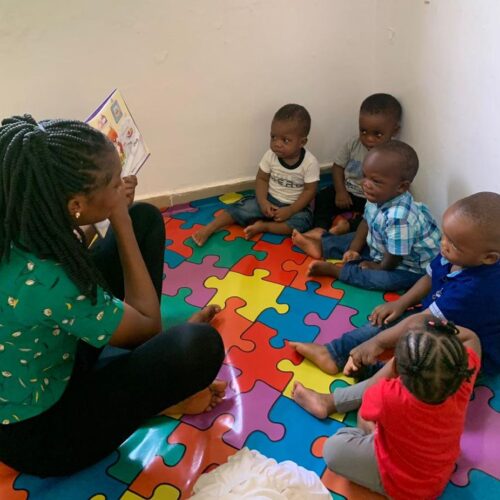
ne common misconception is that fun-based learning lacks academic seriousness.
In reality, effective fun-based learning is highly intentional.
At Beedel Brooke International, engaging activities are carefully designed to support learning goals, skill development, and classroom structure.
Children still develop:
The difference is that learning is delivered in ways that keep children emotionally engaged rather than disconnected.
A child’s early educational experiences often shape how they feel about learning for many years.
Children who consistently experience fear, pressure, or shame around education may gradually disengage emotionally from learning.
On the other hand, children who experience learning as engaging and rewarding are often more likely to:
This emotional relationship with learning matters deeply.
At Beedel Brooke International, we believe strong academics and engaging learning can work together beautifully.
Children do not need to lose their curiosity in order to achieve excellence.
Our learning approach combines:
This balance helps children develop academically while still enjoying the process of learning.
The future increasingly rewards people who can:
Fun-based learning helps children build many of these future-ready skills naturally through active engagement and exploration.
Education should prepare children not only to pass exams, but also to think, communicate, innovate, and thrive confidently in real-world environments.
Fun-based learning is an educational approach that uses engaging and interactive experiences to help children learn more effectively.
Children often learn better through play because play increases engagement, curiosity, participation, creativity, and emotional connection to learning.
Yes. When structured intentionally, fun-based learning can improve understanding, participation, retention, confidence, and critical thinking.
No. Effective fun-based learning still includes classroom structure, expectations, responsibility, and guided instruction.
At Beedel Brooke International, we combine engaging classroom experiences with structured teaching to help children enjoy learning while building strong academic and life skills.
At Beedel Brooke International, we believe childhood learning should inspire curiosity, confidence, creativity, and growth.
Our goal is to create learning environments where children feel excited to explore ideas, participate actively, and develop into capable, confident, and future-ready learners.