
Learn why executive function skills are important for children and how schools can help develop focus, self-control, organization, and independent thinking.
Many of the skills children need for success in school and life go far beyond memorizing information.
Children also need to learn how to:
These abilities are commonly known as executive function skills.
At Beedel Brooke International, we believe helping children develop these skills is an important part of preparing them for academic success, healthy relationships, and future leadership.
Executive function skills are the mental processes that help children plan, focus, remember instructions, manage emotions, and regulate behavior.
These skills help children manage everyday learning and life responsibilities effectively.
Executive function includes areas such as:
These abilities continue developing throughout childhood and adolescence.


Strong executive function skills affect nearly every part of a child’s development.
Children with healthy executive functioning often find it easier to:
These skills influence not only academic performance, but also emotional wellbeing and social development.
Many academic challenges are not always caused by a lack of intelligence.
Sometimes children struggle because they are still developing skills related to:
For example, a child may understand a lesson well but still struggle to:
This is why supporting executive function development is extremely important in modern education.
Focus is a skill children gradually develop through guided practice and supportive environments.
At Beedel Brooke International, we intentionally create structured learning environments that help children strengthen attention and concentration through:
Engaged children often focus better because learning feels meaningful and active rather than emotionally disconnected.
Self-regulation helps children manage emotions, impulses, and behavior appropriately.
Children are not born with strong self-control automatically.
They develop it gradually through consistent guidance, structure, modeling, and emotional support.
Schools can help children strengthen self-regulation by teaching them how to:
These emotional regulation skills support both learning and healthy social interactions.
Executive function skills are deeply connected to independence.
As children grow stronger in organization, planning, and self-management, they gradually become more capable independent learners.
This includes learning how to:
At Beedel Brooke International, we intentionally help children develop responsibility gradually rather than depending entirely on adult supervision.
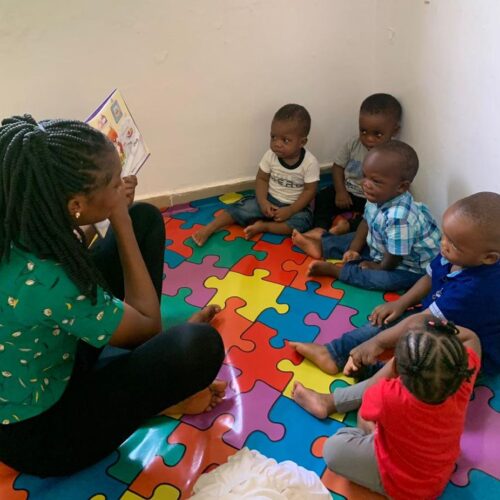
Executive function skills are deeply connected to independence.
As children grow stronger in organization, planning, and self-management, they gradually become more capable independent learners.
This includes learning how to:
At Beedel Brooke International, we intentionally help children develop responsibility gradually rather than depending entirely on adult supervision.

Children often thrive when expectations are clear and routines are consistent.
Predictable learning environments help children develop:
Structure does not mean harshness.
Healthy structure actually creates the emotional safety children need in order to grow confidently and independently.
Children often develop executive function skills more effectively when they are actively engaged in learning.
Interactive learning experiences can strengthen:
This is one reason engaging and participatory classrooms are so valuable for child development.
Passive learning alone may not provide enough opportunities for children to practice these important life skills actively.
Children develop executive function skills at different rates.
Some children naturally develop organization and self-regulation earlier, while others may require additional support and guided practice.
At Beedel Brooke International, we believe development should be supported patiently and intentionally rather than through unhealthy comparison or excessive pressure.
Children grow best in environments where support and expectations work together.
Parents play a major role in strengthening executive function skills at home.
Simple ways families can help include:
Consistency between school and home can significantly strengthen these developmental skills over time.
The future increasingly rewards people who can:
Executive function skills help prepare children for these real-world demands.
Academic excellence matters, but children also need the ability to manage themselves effectively in everyday life.
That is why executive function development remains an important part of our educational philosophy at Beedel Brooke International.
Executive function skills are mental abilities that help children focus, manage emotions, follow instructions, stay organized, and solve problems independently.
These skills support academic success, emotional regulation, responsibility, organization, independence, and healthy social interactions.
Yes. Schools can support executive function development through structured routines, engaging learning experiences, emotional guidance, and opportunities for independent responsibility.
Children improve focus and self-control gradually through guided practice, supportive routines, emotional coaching, engaging learning, and consistent expectations.
At Beedel Brooke International, we combine engaging classroom experiences with structured teaching to help children enjoy learning while building strong academic and life skills.
At Beedel Brooke International, we believe education should help children develop not only academically, but also mentally, emotionally, and behaviorally.
By helping children strengthen executive function skills, we prepare them to become more confident, responsible, focused, and future-ready individuals.